

Key Takeaways
- Traditional hybrids improve fuel economy without requiring charging.
- Plug-in hybrids can make sense for short daily drives when regular charging is available.
- EVs are often easiest to own when charging is dependable at home, work, or nearby public locations.
- Sticker price is only part of the decision. Energy, insurance, maintenance, tires, and charging equipment also affect the budget.
- The right choice is based on real weekly driving habits, not only advertised range or new technology.
Why Powertrain Choice Matters
Vehicle shoppers have more choices than the usual gasoline-powered car or SUV. A traditional hybrid, a plug-in hybrid, and a fully electric vehicle can all reduce gasoline use, but ownership feels different from one to the next. Before focusing on a single model, drivers can learn more about available vehicle options and consider how each powertrain would fit into normal routines.
The newest technology is not automatically the best choice. A driver who cannot charge where they park may prefer the simplicity of a hybrid, while someone with dependable overnight charging and a steady commute may get more value from an EV. The most useful starting point is an honest look at where, when, and how far the vehicle travels every week.
The Three Main Vehicle Types
Traditional Hybrid
A traditional hybrid combines a gasoline engine with an electric motor and battery. It does not plug in. Instead, it recovers energy during braking and uses the engine to help keep the battery charged. Regenerative braking recaptures energy during coasting and braking, which can be especially useful in stop-and-go traffic. This option often suits drivers who want improved efficiency while keeping familiar gas-station refueling.
Plug-In Hybrid
A plug-in hybrid has a larger battery and can drive a limited number of miles using electricity before relying primarily on gasoline. It can be a practical middle ground for people whose weekday errands and commutes fit within its electric range, but who also want the flexibility to take longer trips without planning public charging stops.
Fully Electric Vehicle
An EV uses only battery power, so it has no gasoline engine or fuel tank. It can offer quiet operation and fewer routine engine-related service needs, but it requires a charging plan. For many households, the convenience of charging while parked matters more than having the highest advertised driving range.
Start With A Typical Week Of Driving
Do not choose a vehicle based solely on a single annual vacation or an occasional, unusually long day. Review a normal week instead. Note weekday mileage, highway versus city driving, school drop-offs, work trips, errands, and the number of days the vehicle travels more than 100 miles.
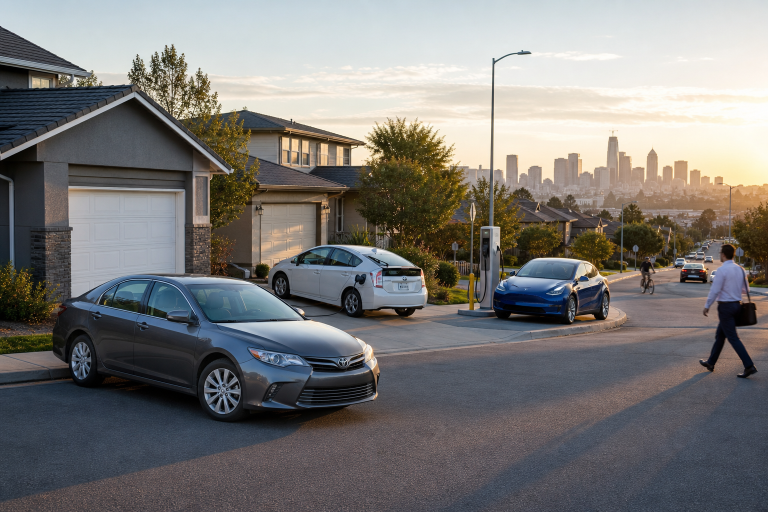
- A local commuter who drives 25 miles a day and returns to the same parking space each night may be well-suited to a plug-in hybrid or EV.
- A salesperson or contractor who regularly covers long distances may value a traditional hybrid’s quick refueling and strong highway flexibility.
- A household that takes frequent weekend trips may prefer a plug-in hybrid or an EV with a well-tested charging plan for its common routes.
Also consider whether this will be the household’s only vehicle. A two-car household may be more comfortable assigning an EV to predictable local driving while keeping another vehicle available for unusual trips.
Check Charging Access Before Buying
Reliable charging access can be more important than the range estimate printed on a vehicle. Home charging is typically the easiest arrangement because the vehicle can charge while it is already parked. Workplace charging can also be helpful, especially for longer commutes.
Apartment residents and condo owners should confirm parking assignments, permission requirements, outlet locations, billing arrangements, and charger availability before committing to a plug-in vehicle. The U.S. Department of Energy notes that many drivers can meet their daily needs by charging at home overnight. At the same time, equipment can provide faster charging for longer commutes or less predictable schedules.
Before buying, ask an electrician about the electrical panel’s capacity, installation cost, permits, and whether outdoor equipment is needed. Public charging can supplement a plan, but relying on it for every charge may require more time and flexibility than some drivers expect.
Compare The Full Cost Of Ownership
The purchase price or monthly payment is only the beginning. Compare each option using your own anticipated mileage and local gasoline and electricity rates. A lower energy bill can be meaningful, but it should be weighed against insurance, financing, charger installation, registration fees, and expected resale value.
- Review fuel or electricity spending for a typical month and year.
- Request insurance quotes for the exact vehicles under consideration.
- Include tire replacement, routine maintenance, and possible charging equipment costs.
- Check current incentives carefully, since eligibility rules and amounts can change.
- Read battery warranty terms, including time and mileage coverage.
EVs generally avoid oil changes and several engine-related maintenance items, but they still need tires, brakes, suspension work, and normal repairs. Heavier vehicles and rapid acceleration can also increase tire wear, so this cost deserves attention.
Think About Road Trips And Longer Travel
Long-distance travel is where ownership differences become most visible. Gasoline vehicles and traditional hybrids can refuel quickly, almost anywhere. Plug-in hybrids can use electricity around town and gasoline for extended drives. EV road trips require charging stops that should be planned around route, charger availability, weather, speed, cargo, and passenger load.
Frequent road-trippers should map their most common destinations before buying. Rare vacation drives should not necessarily control the decision, but they should be realistic. A test route can reveal whether charging stops fit naturally into meals and breaks or would make the trip feel inconvenient.
Match The Vehicle To Passenger And Cargo Needs
Powertrain is only one part of the choice. Check rear-seat room, car-seat access, cargo capacity, visibility, pet-friendly features, luggage capacity, sports equipment storage, and daily parking conditions. A compact vehicle may be easier to maneuver and more efficient. At the same time, a crossover or SUV may be worth the added cost for a growing family or regular cargo demands.
Avoid upsizing solely for occasional needs if a roof rack, cargo carrier, rental vehicle, or second household vehicle could handle those rare situations. The vehicle should be comfortable on ordinary Tuesdays, not just capable on one crowded weekend.
Use A Simple Test-Drive Checklist
Test-drive more than one powertrain when possible. During each drive, check the following:
- Acceleration and response in city traffic.
- Seating position, entry, exit, and outward visibility.
- Control layout, screen usability, and climate settings.
- Road noise and ride comfort on familiar streets.
- Rear-seat comfort and cargo space for normal gear.
- How easily the vehicle fits in your garage, driveway, or parking space.
Common Questions About Hybrids And EVs
Do Traditional Hybrids Need To Be Plugged In?
No. Traditional hybrids charge their batteries while driving and braking, then refuel at gas stations like conventional vehicles.
When Does A Plug-In Hybrid Make Sense?
It can be a strong choice for drivers with regular access to charging, short daily trips, and occasional long-distance travel.
Can An EV Work Without Home Charging?
Yes, but a dependable workplace or public charging is essential. Study the locations, access hours, payment methods, and typical wait times before deciding.
Choose The Vehicle That Matches Real Life
No single powertrain is right for every driver. A traditional hybrid offers an easy transition and better fuel economy without needing to plug in. A plug-in hybrid can balance electric commuting with the flexibility of gasoline. An EV may be an excellent fit for households with dependable charging and predictable routes. Compare actual mileage, parking, passengers, travel habits, and total ownership costs, then choose the vehicle that works best in everyday life.