

Key Takeaways
- Budget for the complete cost of ownership, not only the purchase price or monthly payment.
- Choose a vehicle based on passengers, cargo, commuting, weather, parking, and towing needs.
- Compare new, used, and certified pre-owned vehicles by total value and expected ownership costs.
- Review financing terms, the out-the-door price, and every document before signing.
- Check safety ratings, recalls, vehicle history, and inspection results before making a final decision.
- Plan for insurance, maintenance, tires, repairs, and roadside needs during the first year.
Buying a vehicle is a major financial decision, but a clear process can make it far less stressful. The best choice is not always the newest model, the lowest advertised price, or the vehicle with the most features. It is the one that fits your routine, budget, and plans for the years ahead.
Start by identifying the vehicles and services that match your needs, then learn more about available options before narrowing your shortlist. Taking time to compare costs, safety information, financing, and long-term maintenance can help you shop with confidence instead of pressure.
1. Start With the Full Vehicle Budget
The vehicle price is only one part of what you will pay. Build a monthly estimate that includes the payment, insurance, fuel or charging, registration, taxes, parking, maintenance, tires, and likely repairs. A lower-priced vehicle can still cost more over time if it needs expensive repairs, uses more fuel, or carries higher insurance premiums.
Set aside an emergency fund as well. Even newer vehicles can need a battery, tire replacement, windshield repair, or unexpected service. A used vehicle may need maintenance shortly after purchase, so leave room in the budget instead of spending every available dollar on the sale price.
2. Decide What the Vehicle Must Do
Focus on daily life before styling or popularity. Consider your commute length and annual mileage, the number of regular passengers, child-seat placement, pet needs, cargo space, winter weather, towing requirements, and garage dimensions. A large SUV may offer flexibility for some households, while a compact vehicle may be easier to park, fuel, and insure.
Make a short list of non-negotiables and preferences. For example, all-wheel drive, third-row seating, a specific towing capacity, easy rear-seat access, or enough room for work equipment may be essential. Premium audio, larger wheels, and extra appearance packages may be nice to have, but should not distract from practical needs.
3. Compare New, Used, and Certified Pre-Owned Choices
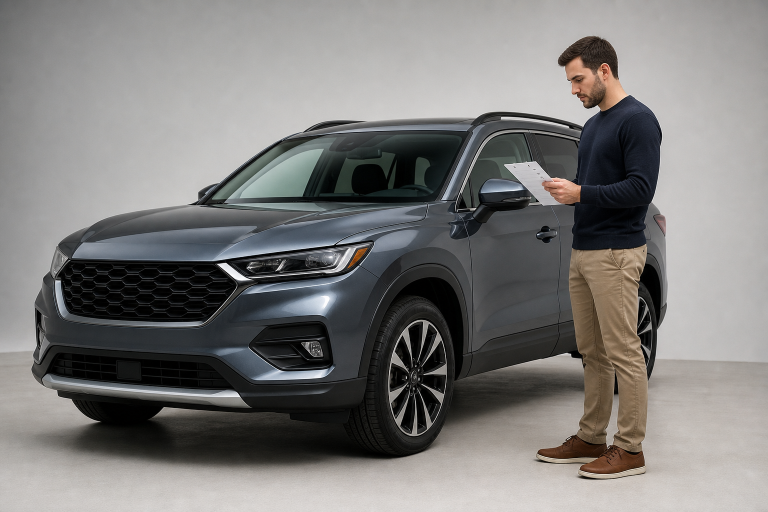
New vehicles typically offer the latest features, full warranty coverage, and no prior ownership history, but depreciation can be steep in the early years. Used vehicles may have a lower purchase price, but condition, maintenance history, and repair risk matter greatly. Certified pre-owned vehicles can provide a middle ground, often pairing a late-model vehicle with an inspection process and limited warranty coverage.
Compare three to five similar vehicles using the same categories: purchase price, mileage, warranty, fuel economy, expected maintenance, insurance, safety equipment, and resale outlook. A low sticker price does not automatically mean a lower long-term cost.
4. Research Safety and Reliability Before Shopping
Review crash-test results, standard safety features, and available driver-assistance technology for every vehicle on your list. You can use vehicle safety resources to review safety ratings and search for open recalls by VIN. An open recall should be addressed before or immediately after purchase, depending on the situation.
Also, look beyond ratings. Research common service needs, tire sizes, replacement costs, battery type, and owner complaints. Safety ratings are useful comparisons, but they do not replace a careful test drive, a vehicle-history review, or an independent inspection.
5. Prepare Financing Before Visiting a Seller
Know the difference between the amount financed, interest rate, annual percentage rate, loan term, and total interest paid. A longer loan may lower the monthly payment, but it can also increase total interest and leave you owing more than the vehicle is worth for longer.
Review your credit report, decide on a down payment, and obtain financing estimates from a bank or credit union before shopping. The Federal Trade Commission explains that shoppers should compare financing offers by the APR, loan length, amount financed, and total cost when financing or leasing a car. Pre-approval gives you a useful benchmark, not an obligation to use one lender.
6. Build a Smart Shortlist and Test Drive It
Once you have identified suitable models, compare their cargo room, warranty coverage, monthly ownership estimate, fuel or charging needs, and service expectations. Then test drive each serious candidate on roads that resemble your normal route. Include city streets, highway speeds, turns, braking, and rough pavement when possible.
Check visibility, seat comfort, steering feel, rear-seat space, climate controls, cameras, storage compartments, and connectivity. Bring the items you use most, such as a stroller, sports bag, pet crate, or work tools, to confirm that the cargo area works in real life. Listen for unusual sounds when braking, accelerating, turning, or reversing.
7. Inspect Used Vehicles Carefully
For a used vehicle, match the VIN on the dashboard, title, registration, and history report. Review accident records, title branding, flood damage, mileage consistency, and service records. Inspect the tires, brakes, lights, windows, locks, fluids, warning lights, and exterior panels.
A vehicle-history report is helpful, but it cannot reveal every mechanical issue or unreported incident. Schedule an independent pre-purchase inspection whenever possible. A qualified technician may identify worn suspension components, fluid leaks, brake concerns, hidden collision repairs, or overdue maintenance that a quick walk-around can miss.
8. Compare the Out-the-Door Price
The out-the-door price is the complete vehicle cost before financing. It should include the agreed vehicle price, taxes, title, registration charges, documentation fees, and any requested accessories. Keep the trade-in value separate from the vehicle price so both numbers are easy to evaluate.
Ask for written offers and question fees or optional products you did not request. Do not let a low monthly payment hide a higher vehicle price, a longer loan term, or extra add-ons. Compare the final numbers from more than one seller when possible.
9. Read the Paperwork and Plan for Ownership
Before signing, review the buyer’s order, financing contract, warranty terms, disclosures, payment schedule, APR, amount financed, and loan length. Ask whether financing is final or subject to approval. Keep copies of every signed document, receipt, inspection report, and service record.
During the first year, follow the maintenance schedule in the owner’s manual and set reminders for oil changes, tire rotations, inspections, and fluid checks. Monitor tire pressure and tread, track fuel and repair costs, and keep basic roadside supplies such as jumper cables, a flashlight, first-aid items, and an emergency contact list.
Common Car-Buying Questions
How much should I spend on a vehicle?
There is no single rule that fits every household. Base the decision on income, savings, debt, insurance costs, fuel use, expected repairs, and the amount of financial flexibility you want to keep after the purchase.
Is new or used better?
New vehicles may offer stronger warranty coverage and newer technology. Used vehicles may offer lower upfront costs. The better choice depends on condition, financing, maintenance history, and total ownership costs.
Is a vehicle-history report enough?
No. Use it with a test drive, a visual inspection, service records, recall research, and an independent mechanical inspection.
Conclusion
A smart vehicle purchase begins well before the test drive. Set a complete budget, choose based on real needs, compare ownership costs, research safety, review financing, and inspect the final paperwork carefully. With a practical checklist, you can make a more informed decision and select a vehicle that remains a good fit long after the keys are in your hand.